

By Dennis Karpenko, CFA®
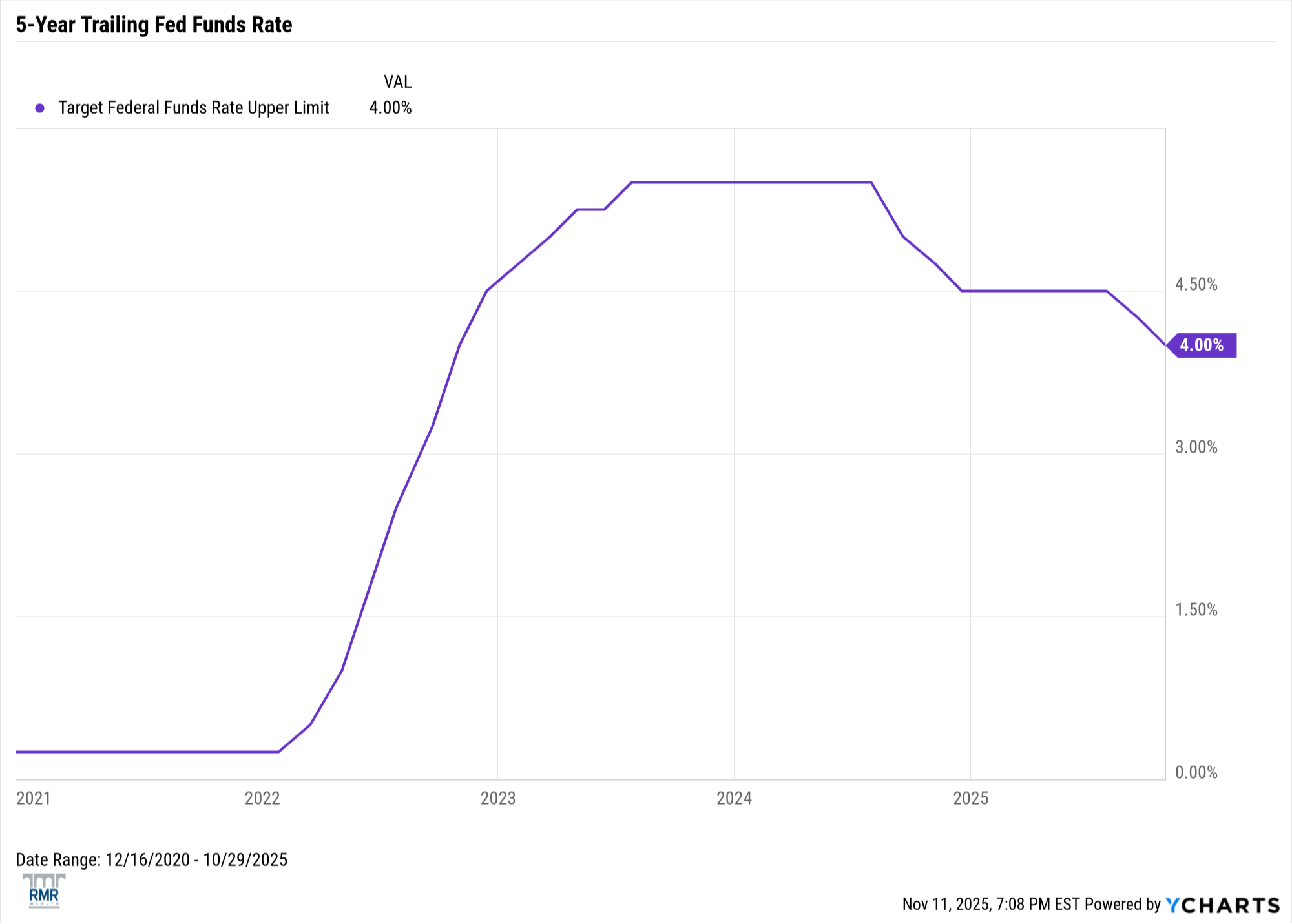
October was a mixed month for markets. Performance for developed market equities was positive against a backdrop of easing trade tensions between the U.S. and China and another strong earnings season for U.S. companies. The month concluded with the Federal Reserve cutting rates once more, bringing rates down a total of 0.5% for the year.
Equities
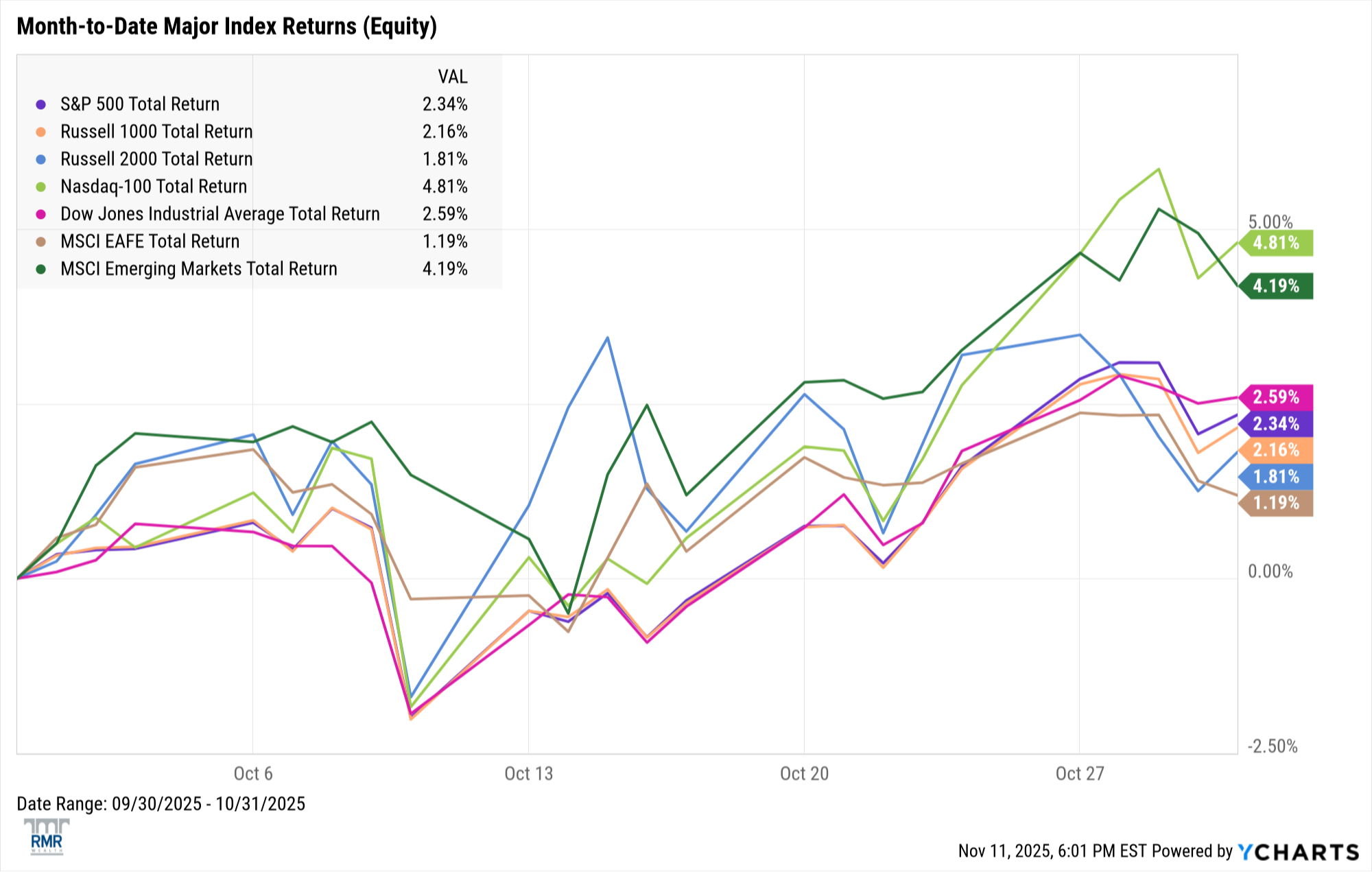
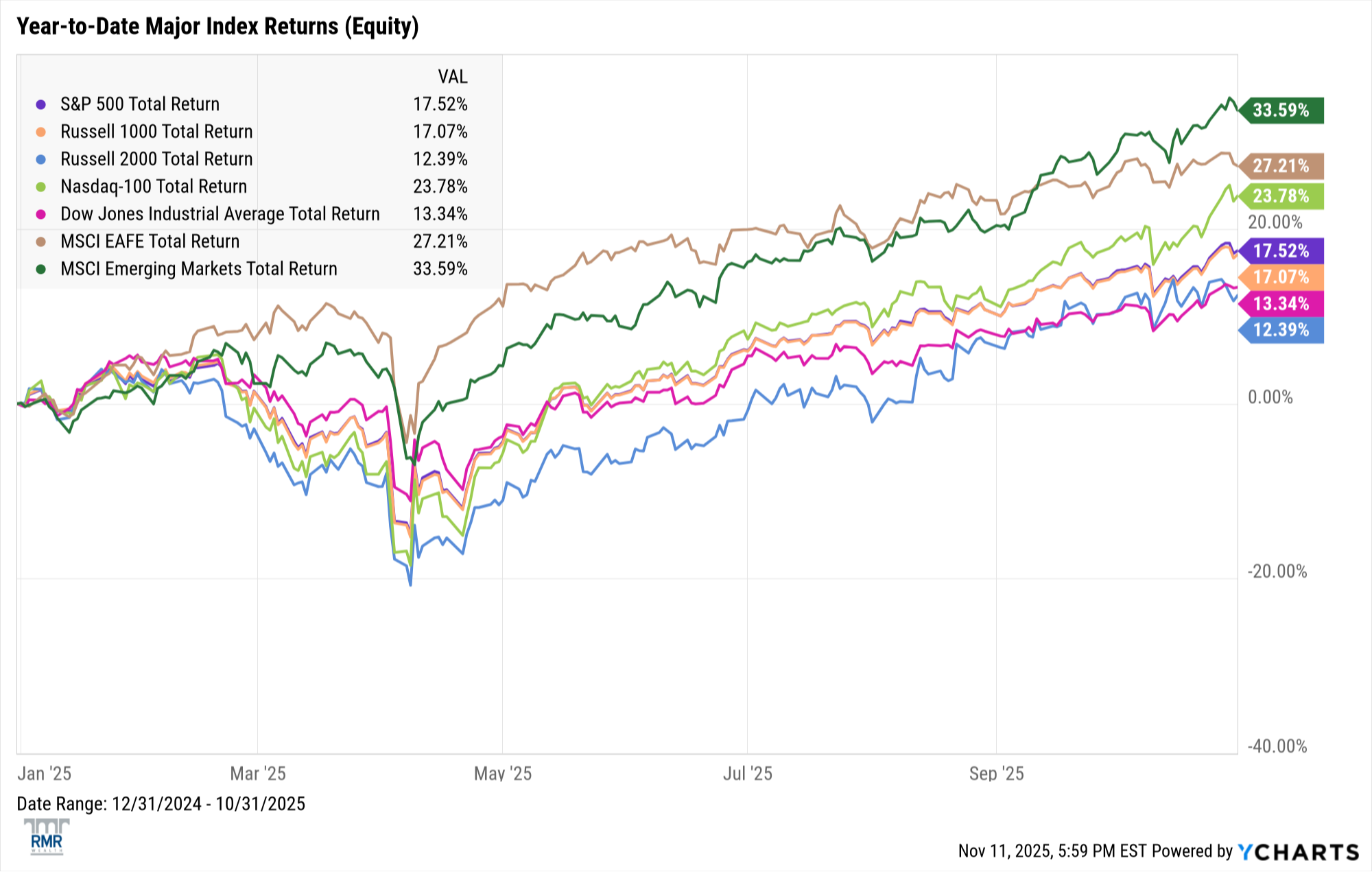
Equity indexes were positive in October, although the returns were more modest compared to September. The S&P 500 and NASDAQ 100 were up 2.34% and 4.81% respectively and were supported by strong earnings as over 80% of companies (as of month end) beat consensus earnings expectations. Sector returns were mixed, with Tech leading at over 6% while Materials, Communication Services, Real Estate, Financials, and Consumer Staples each posted losses over 2%.
International equity returns saw a notable gap between developed and emerging markets as the MSCI Emerging Markets index returned over 4%, whereas the developed markets index returned just over 1% (both still leading year to date).
Fixed Income
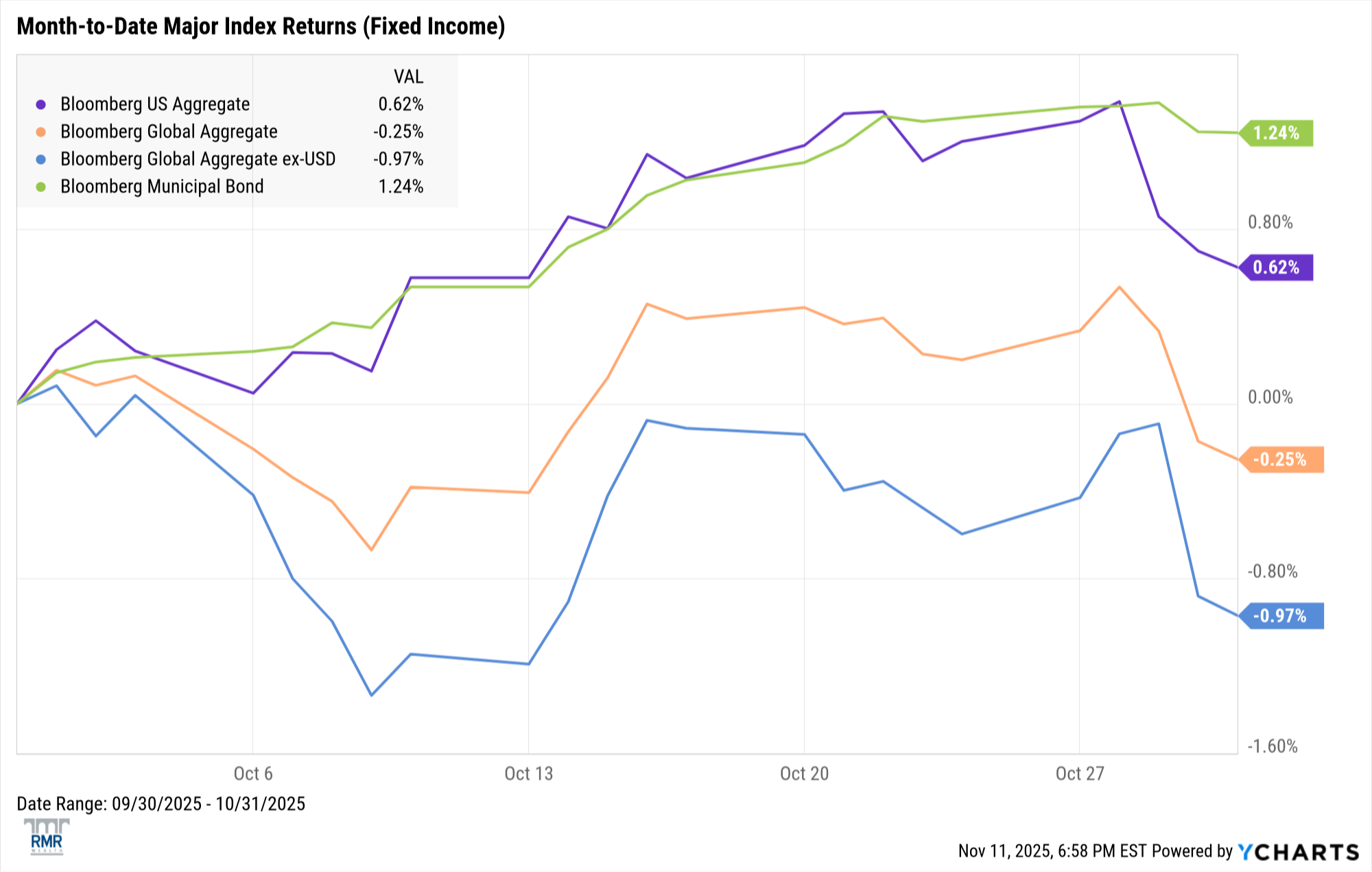
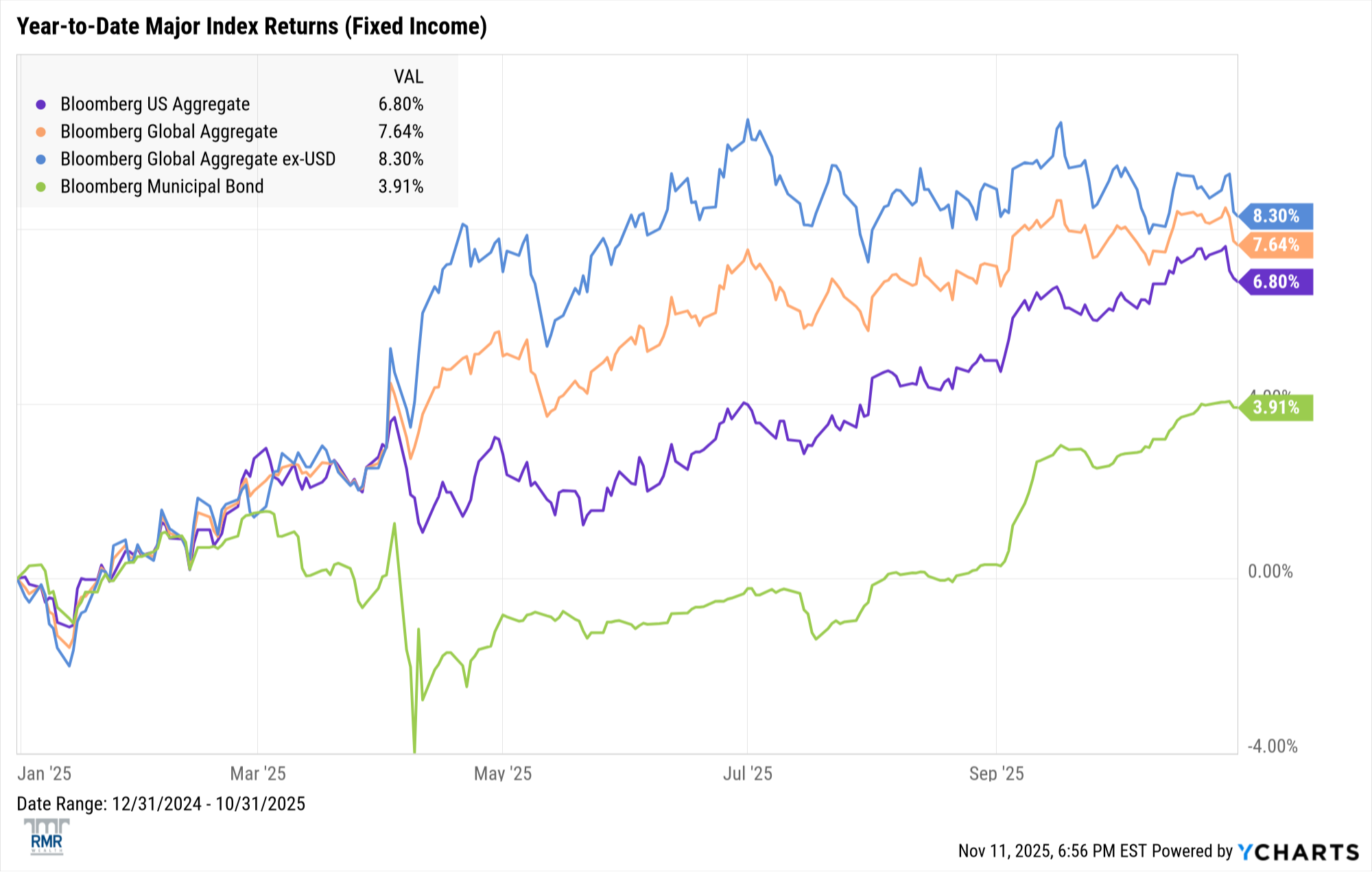
Despite a rate cut, U.S. yields climbed slightly following Federal Reserve Chair Jerome Powell’s comments to temper expectations for a December cut. Separate from the U.S., emerging market debt outperformed in October with support from higher real yields and a weakening U.S. dollar.
Most notably, spreads between U.S. investment-grade and high-yield corporate bonds widened; this contrasts with much of the year to date, when spreads had been tight.
Economic Recap
The Fed has now cut rates by 50 basis points in 2025, with the final meeting scheduled for December. For reference, in 2024, rates were cut by a total of 100 basis points following several years of hikes.
The government shutdown ended on November 12. Some September and October data will be released, but some will likely never be released. The Bureau of Labor Statistics (BLS) released the September jobs report on November 20, 2025, and has stated that a full October jobs report will not be released because the necessary household survey data could not be collected. Other October reports may also be canceled or delayed, creating permanent gaps in the data. With fewer data releases available, the Fed has been more cautious in its approach to rates.
Statistics are DELAYED due to the government shutdown
- U.S. Labor Force Participation Rate was 62.30% in August
- U.S. Unemployment Rate was 4.30% in August
- U.S. Inflation Rate was 2.92% in August
Disclosures
Investing involves risks, and investment decisions should be based on your own goals, time horizon, and tolerance for risk. The return and principal value of investments will fluctuate as market conditions change. When sold, investments may be worth more or less than their original cost.
The forecasts or forward-looking statements are based on assumptions, may not materialize, and are subject to revision without notice.
The market indexes discussed are unmanaged and generally considered representative of their respective markets. Index performance is not indicative of the past performance of a particular investment. Indexes do not incur management fees, costs, and expenses. Individuals cannot directly invest in unmanaged indexes. Past performance does not guarantee future results.
U.S. Treasury Notes are guaranteed by the federal government as to the timely payment of principal and interest. However, if you sell a Treasury Note prior to maturity, it may be worth more or less than the original price paid. Fixed income investments are subject to various risks, including changes in interest rates, credit quality, inflation risk, market valuations, prepayments, corporate events, tax ramifications and other factors.
International investments carry additional risks, which include differences in financial reporting standards, currency exchange rates, political risks unique to a specific country, foreign taxes and regulations, and the potential for illiquid markets. These factors may result in greater share price volatility.
Please consult your financial professional for additional information.
This content is developed from sources believed to be providing accurate information. The information in this material is not intended as tax or legal advice. Please consult legal or tax professionals for specific information regarding your individual situation.