

By Dennis Karpenko, CFA®
July saw a divergence in equity and fixed income as most major equity markets printed positive figures, before tapering off to close the month, while fixed income indexes were mixed. Much of July’s market developments circled around movement in tariffs and trade agreements; the U.S. made progress in negotiations with Vietnam, Japan, and the EU, among others.
Equities
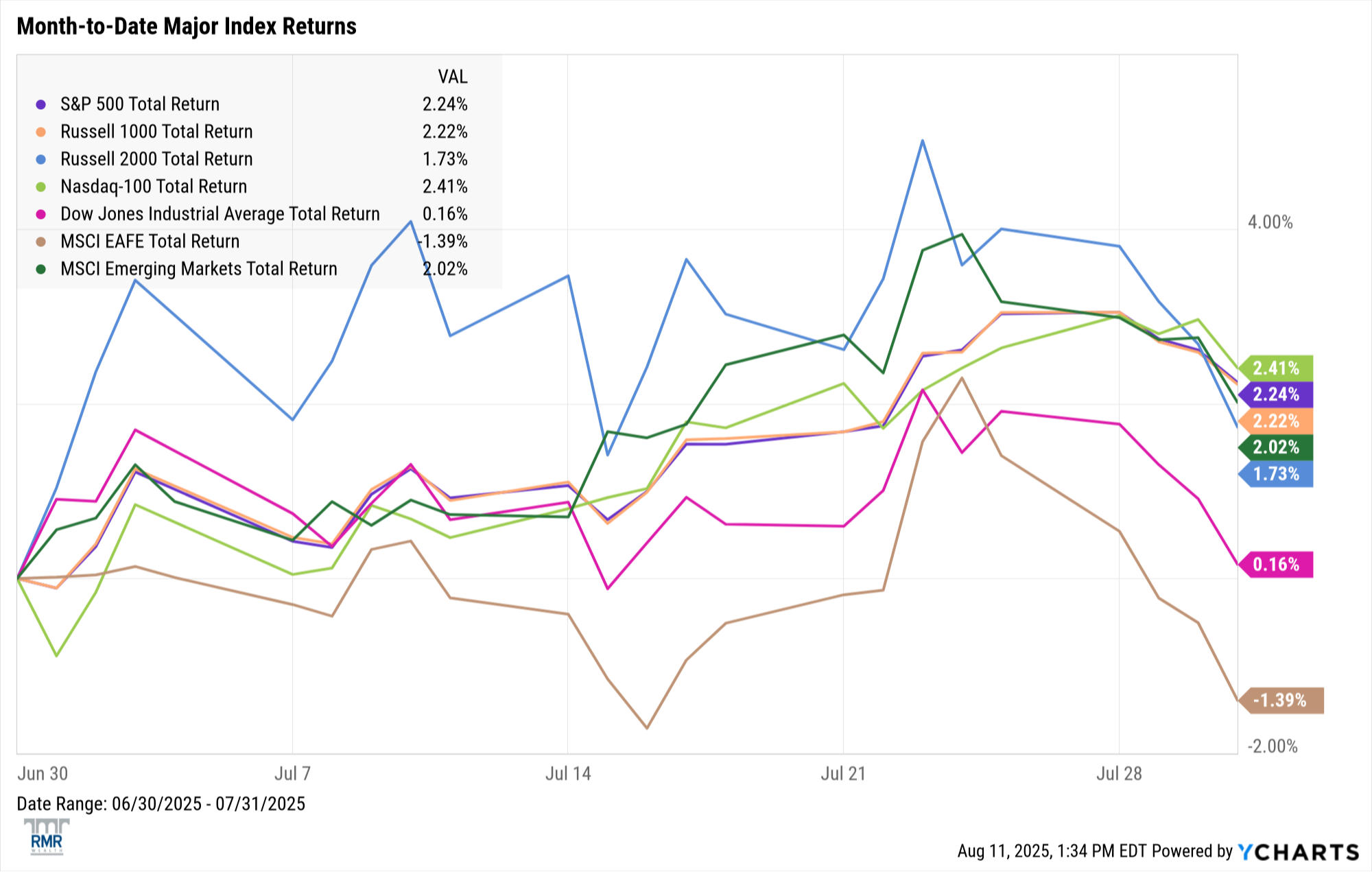
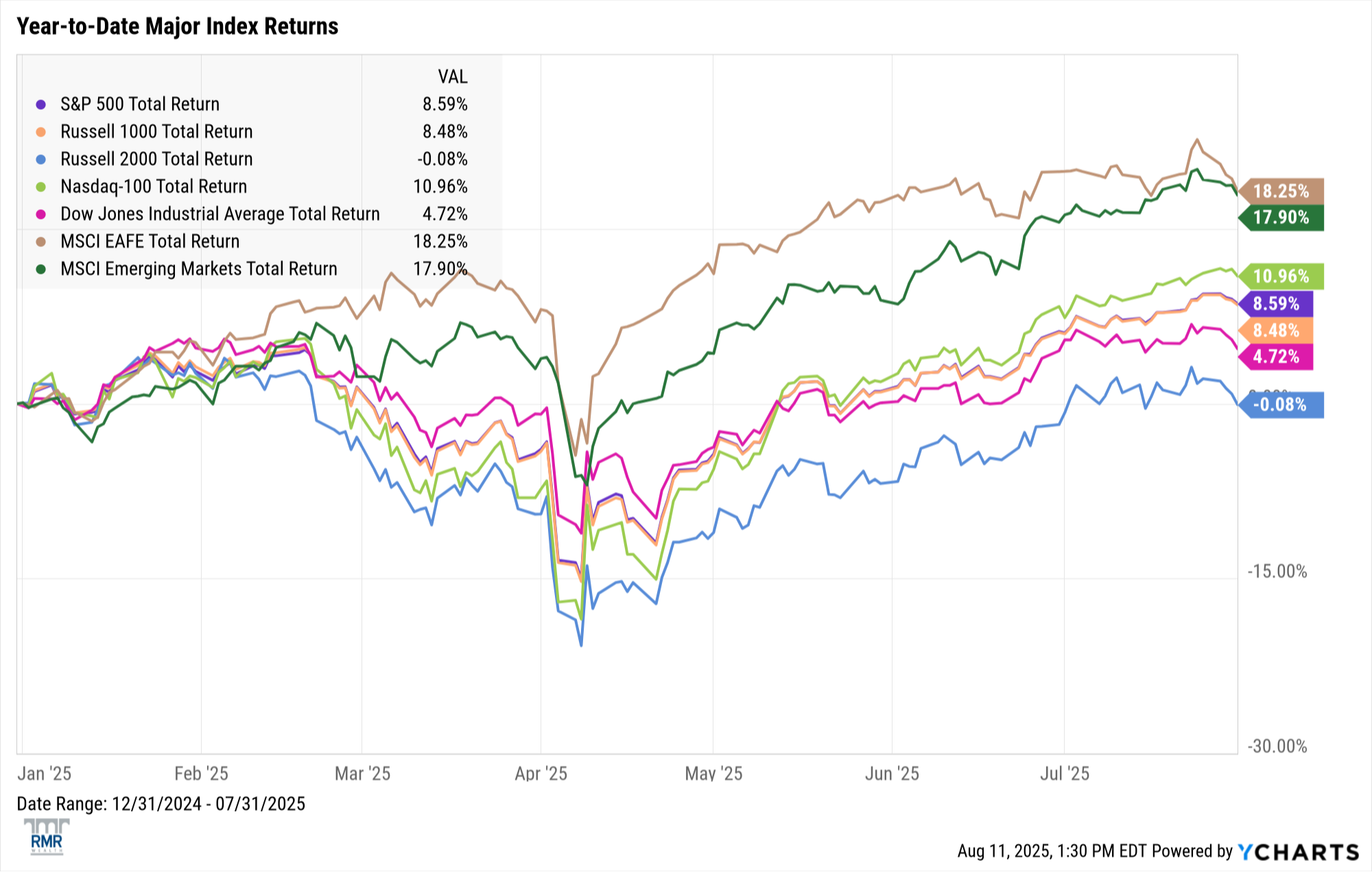
July was another positive month for most broad-based equity indexes. The S&P 500 had around 80% of companies that reported beating earnings and revenue growth expectations (as of month-end), providing a major tailwind for the markets. Most notably, this positive surprise percentage is above both the 5-year and 10-year averages. All sectors outside of Healthcare have been positive year-to-date, with Utilities, Industrials, and Technology leading, all three over 13% respectively.
Despite lagging to start the year, recent months have been positive for small-cap stocks. Talks of possible rate cuts in the forthcoming months and potential benefits from recent tax legislation create a more favorable backdrop. Conversely, non-U.S.developed markets tipped negative for the month while emerging market equities continued to climb positive (EM now up almost 18% year-to-date).
Fixed Income
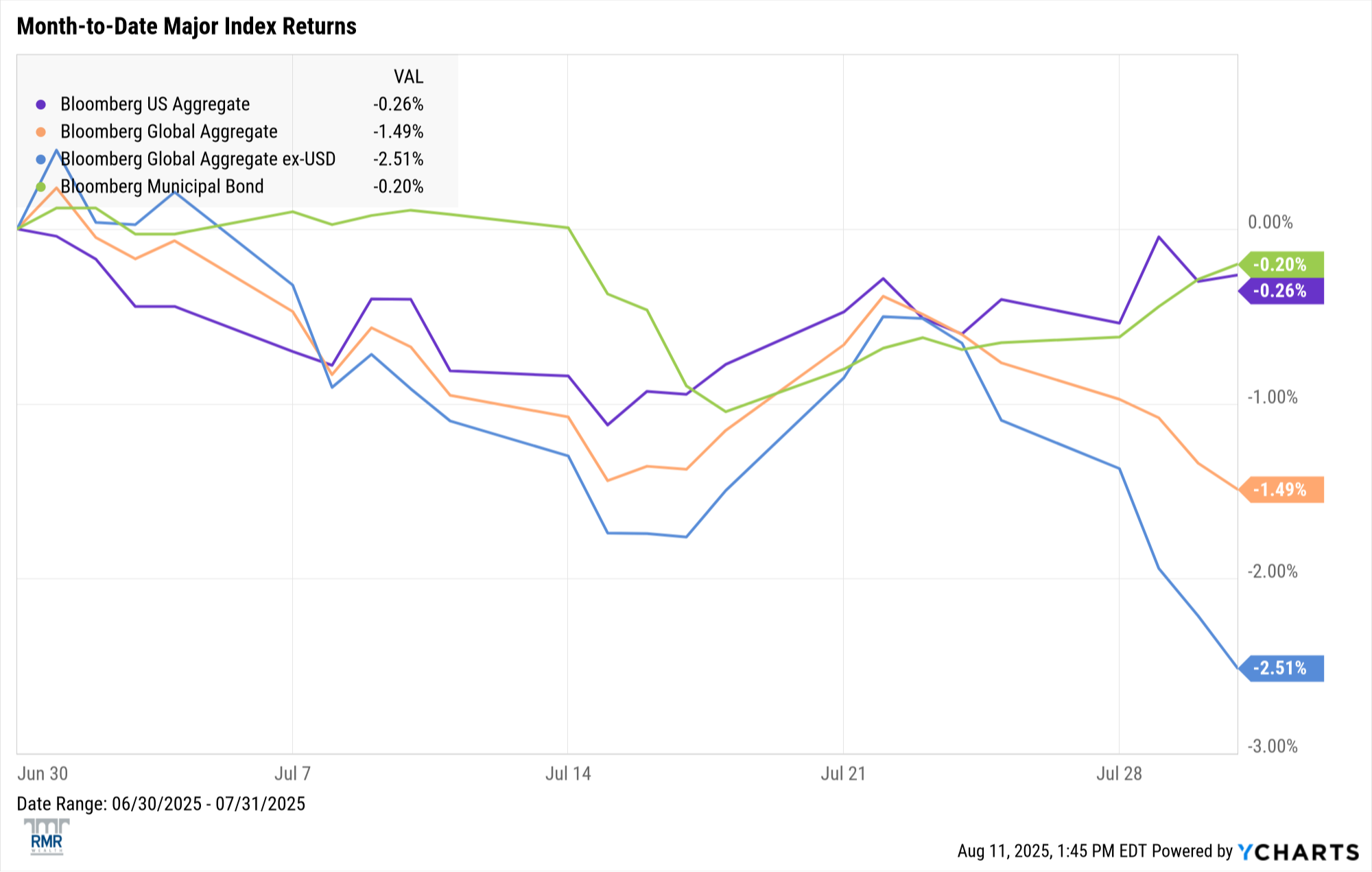
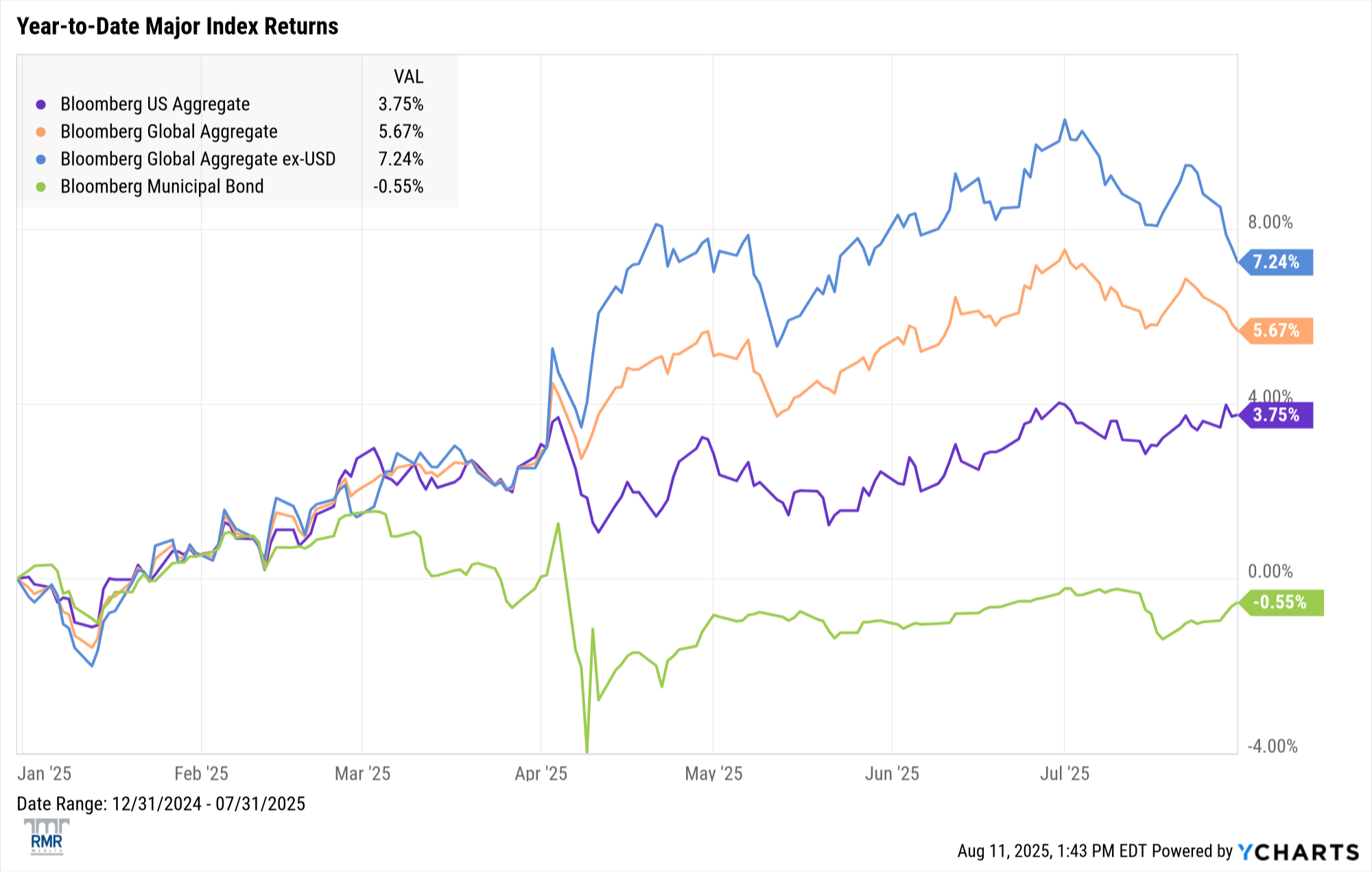
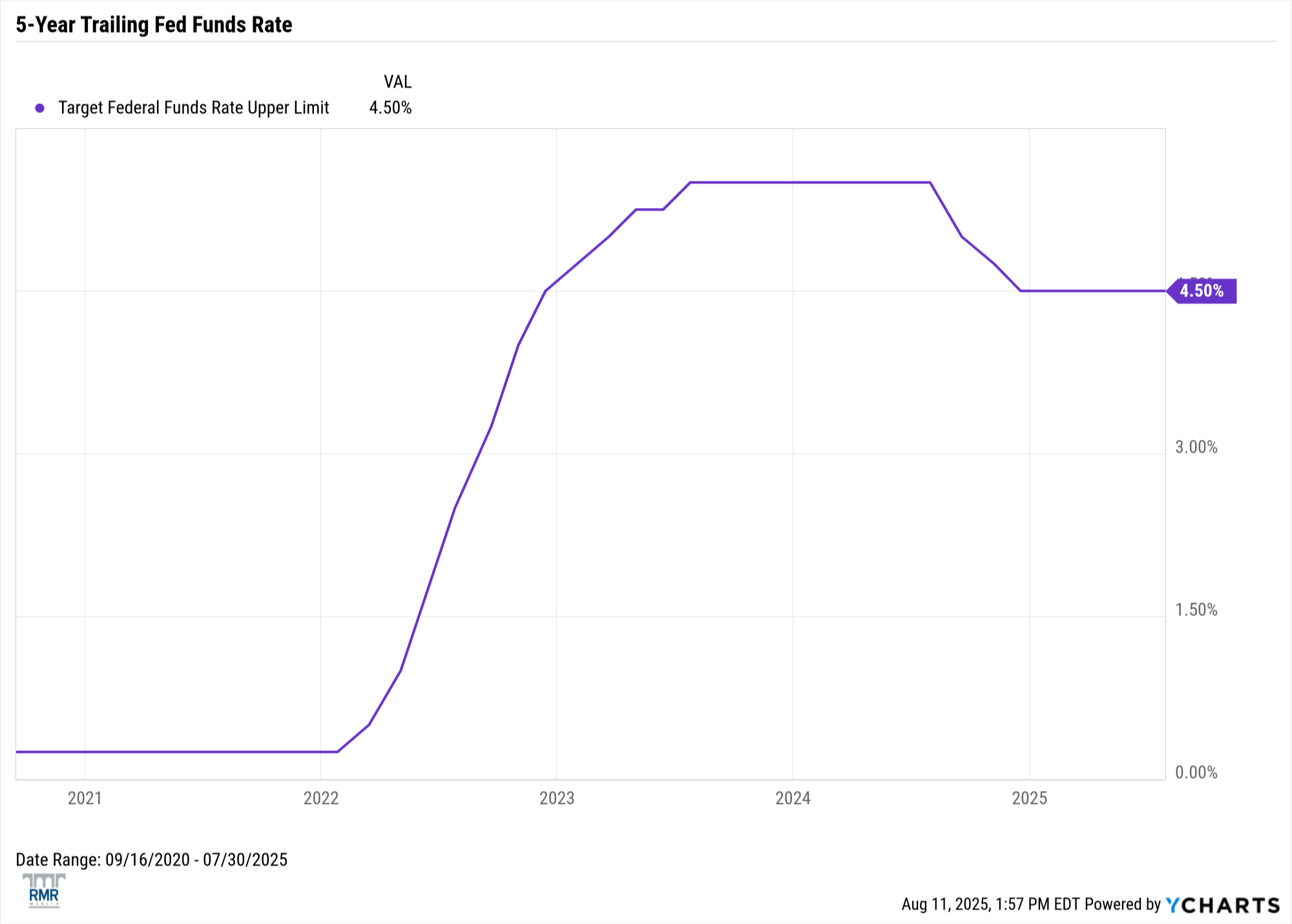
The Federal Reserve (Fed) left short-term rates unchanged in July while treasury yields climbed higher. A combination of factors has also led long-term rates to climb higher than short-term rates: the continued pause in rate cuts from the Fed, inflation continuing to tick higher, and renewed concerns regarding the U.S. budget deficit.
Higher yields have commensurately lowered prices on fixed income instruments as many of the major bond indexes posted negative total return figures for the month of July. High-yield bonds in particular topped investment-grade bond returns, and a continued tight credit spread (the premium in yield over the same-maturity treasury received for holding a riskier bond) indicates average investor risk appetites have increased.
Economic Recap
The Federal Reserve (Fed) held its target federal funds rate steady in the 4.25%-4.50% range during their July meeting; although there has been more indication towards a future rate cut, the Fed has maintained wanting to see more justification for cutting further. Overall, the economy had a positive print for Q2 as GDP rose by 3% as compared to the 0.5% pullback in Q1.
Other notable economic figures:
U.S. Labor Force Participation Rate of 62.20% (down from 62.30% in June)
U.S. Unemployment Rate of 4.20% (up from 4.10% in June)
U.S. Inflation Rate of 2.70%(up from 2.67% in June).
Investing involves risks, and investment decisions should be based on your own goals, time horizon, and tolerance for risk. The return and principal value of investments will fluctuate as market conditions change. When sold, investments may be worth more or less than their original cost.
The forecasts or forward-looking statements are based on assumptions, may not materialize, and are subject to revision without notice.
The market indexes discussed are unmanaged, and generally, considered representative of their respective markets. Index performance is not indicative of the past performance of a particular investment. Indexes do not incur management fees, costs, and expenses. Individuals cannot directly invest in unmanaged indexes. Past performance does not guarantee future results.
The Dow Jones Industrial Average is an unmanaged index that is generally considered representative of large-capitalization companies on the U.S. stock market. The Nasdaq Composite is an index of the common stocks and similar securities listed on the Nasdaq stock market and considered a broad indicator of the performance of stocks of technology and growth companies. The MSCI EAFE Index was created by Morgan Stanley Capital International (MSCI) and serves as a benchmark of the performance of major international equity markets, as represented by 21 major MSCI indexes from Europe, Australia, and Southeast Asia. The S&P 500 Composite Index is an unmanaged group of securities that are considered to be representative of the stock market in general.
U.S. Treasury Notes are guaranteed by the federal government as to the timely payment of principal and interest. However, if you sell a Treasury Note prior to maturity, it may be worth more or less than the original price paid. Fixed income investments are subject to various risks including changes in interest rates, credit quality, inflation risk, market valuations, prepayments, corporate events, tax ramifications and other factors.
International investments carry additional risks, which include differences in financial reporting standards, currency exchange rates, political risks unique to a specific country, foreign taxes and regulations, and the potential for illiquid markets. These factors may result in greater share price volatility.
Please consult your financial professional for additional information.
This content is developed from sources believed to be providing accurate information. The information in this material is not intended as tax or legal advice. Please consult legal or tax professionals for specific information regarding your individual situation.